
Client: Sellafield Ltd
Location: Sellafield, UK
Sector/Industry: Nuclear
Completion Date / Year: 2025
Project Background
RVA recently supported Sellafield’s Remediation Accelerated Decommissioning (RAD) team as part of a development initiative aimed at transferring cross‑industry experience and learning into the nuclear‑regulated environment. The purpose of the assignment was to introduce dismantling and demolition best practice from sectors such as power generation and petrochemicals, and to evaluate where ‘outside the fence’ approaches could add true value to nuclear decommissioning.
Sellafield is one of Europe’s largest and most complex nuclear facilities, comprising legacy structures dating back to the 1940s–1960s. These include redundant buildings, ponds, silos, and contaminated infrastructure undergoing long‑term decommissioning. The RAD team is focused on accelerating hazard reduction, improving safety performance, and enabling future site remediation and land repurposing. RVA was engaged as a specialist engineering consultant to propose alternative arrangements and methodologies, drawing on over 30 years of global demolition and decommissioning experience to enhance Sellafield’s existing nuclear‑specific processes.
Challenges
Working within a nuclear‑regulated environment introduced several technical, cultural, and logistical barriers. This highly regulated sector made procedural changes challenging to implement, while the operating environment itself created constraints not typically encountered in non-nuclear industrial settings. Some of the main factors that had to be addressed were:
- A congested worksite bordered by live operational units, significantly restricting access, equipment movement, and safe working boundaries
- A workforce with experience focused generally on nuclear hazards, this limiting exposure to wider industrial risk‑management practices commonly used in non‑nuclear environments
- As the nuclear industry is highly regulated and dependent on strict adherence to processes and procedures, it takes time and explanation to adjust to alternative arrangements and methods of demolition not previously used on a nuclear licensed site.
Solutions
RVA addressed these challenges by applying deep technical experience, established decommissioning expertise, and structured project processes. Drawing on insights gained from delivering more than 1,000 complex projects, RVA supported site stakeholders in developing a clear roadmap that set out alternative arrangements and methodologies for the safe decommissioning and demolition of redundant buildings and equipment. Key elements included:
- Facilitating a series of structured workshops with key site stakeholders, ensuring alignment, clarity of purpose, and a shared understanding of constraints and risks
- Developing alternative arrangements for site processes based on RVA experience and industry-recognised working practices
- Ensuring all processes were compliant with CDM duty holder roles and other relevant legislation
Outcomes / Results
The project was successfully delivered on time and included a programme framework with developed processes for use by RAD team project managers when executing demolition projects of varying complexity and nuclear interface. All processes are being reviewed by the Sellafield site team for inclusion in their working practices.
Imagery
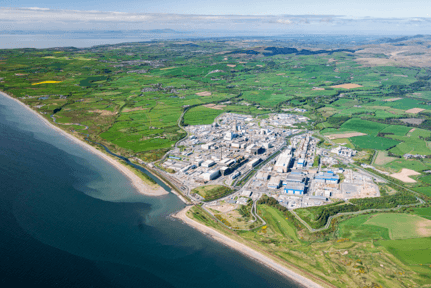
The Sellafield site
